Contemporary art installations often transform gallery spaces into immersive environments, inviting viewers into a unique dialogue with the artwork. Understanding these large-scale, mixed-media constructions involves recognizing their underlying conceptual frameworks and the deliberate strategies artists employ to engage the audience. By identifying these elements, art enthusiasts and gallery visitors can move beyond mere observation to a deeper appreciation and interpretation of the artist's intent and the artwork's impact.
Installation art distinguishes itself from traditional art forms by prioritizing a complete, unified experience for the viewer, rather than focusing on individual objects. This emphasis on experience aims to provide an intense encounter, challenging the perceived limitations of earlier art movements that sometimes foregrounded representation over direct engagement.
What is Installation Art?
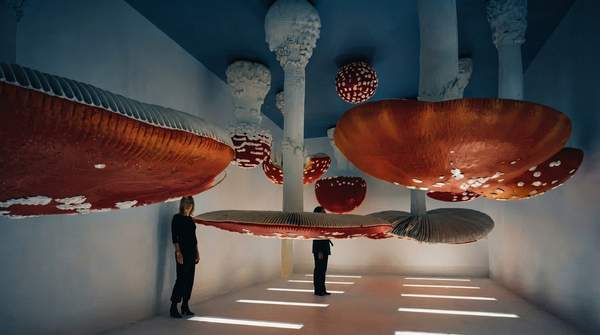
Installation art describes large-scale, mixed-media constructions that are often designed for a specific place or for a temporary period. These artworks, sometimes referred to as "environments," typically occupy an entire room or gallery space, compelling the spectator to walk through or around them to engage fully. The core characteristic of installation art is its ability to transform a viewer's experience of an interior space through a combination of mediums, interactivity, and immersive elements.
The emergence of installation art was influenced by avant-garde movements such as Minimalism, Environmental Art, Land Art, Conceptual Art, and Performance Art. These movements reacted against what was seen as the commodification of artwork, the emphasis on representation over experience, and the constraints of a singular, detached encounter with art. Installation art, as a mode of production and presentation, offers a complex and multifaceted engagement that reflects a fragmented and contingent representation of experience.
While some installations are designed for contemplation from a distance, others are so fragile they can only be viewed from a doorway or one end of a room. Regardless of the specific interaction, the focus remains on how the viewer experiences the work, aiming to create a unified and intense encounter. This approach became a dominant format, particularly for large-scale and spectacular works, with the increase in new venues and international exhibitions in the 1980s.