Unlike a painting on a wall or a sculpture on a pedestal, a work of digital art is often an unstable entity, a system of software, hardware, and interaction vulnerable to the relentless pace of technological change. Preserving these works for future generations requires a fundamental shift in conservation philosophy, moving away from the preservation of a static object toward managing the identity and behavior of an artwork over time. To meet this challenge, institutions are developing new strategies centered on intensive documentation, source code analysis, and treatment prototyping to ensure that art created on computers can survive the obsolescence of the very technology that brought it to life.
Core Challenges: Obsolescence and Conceptual Integrity
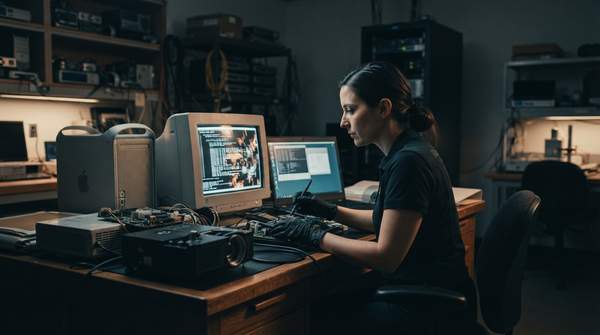
The conservation of digital art faces two primary obstacles that distinguish it from the care of traditional media. The first and most relentless is technological obsolescence. Computer-based artworks are dependent on specific hardware, operating systems, and software that can become unavailable or non-functional in a matter of years. This presents a profound challenge for museum collection management systems, which, as the Guggenheim notes, were primarily designed to catalogue unique physical objects. Such systems struggle to capture the complex web of digital components, dependencies, and code required to re-exhibit a piece of software-based art. Conservators must therefore create entirely new vocabularies to describe and track the digital elements essential for an artwork's future display.
The second challenge is preserving the work's conceptual integrity, a task that goes far beyond material preservation. Some contemporary art is intentionally ephemeral or interactive, designed to change or even disappear over time. This raises ethical questions about how to conserve a piece that was never meant to last indefinitely. For these works, the core of the art lies in its behavior, its interaction with the viewer, or its fleeting nature. As a result, conservation must focus on maintaining the artist's core concept and the intended experience, safeguarding the identity of the artwork itself.