Contemporary artists who work with everyday objects do not simply reproduce the mundane; they transform it. Three distinct strategies emerge from museum and academic sources: altering an object's scale, as Robert Therrien does with oversized furniture; transforming its material into polished consumer spectacle, as Jeff Koons does with stainless steel; and collecting objects that already carry human stories, as Josh Faught does. Each technique produces a different register of social commentary, ranging from memory and nostalgia to mass consumption and identity.
Artists Transforming the Mundane: Strategies and Themes
Robert Therrien's method is one of magnification. By experimenting with materials, techniques and scale, the Tate observes, he shows everyday objects in a new light, revealing their hidden narratives and drama. His installations explore the physical and emotional connections we have with the things that help us live our lives. His Red Room (2000–2007) fills a normal room with enlarged domestic objects, posing the essential question of his practice: if you take a familiar item and "make it huge and copy and paste it into a normal room, what happens?" The answer, according to the Tate, is work that triggers memories and nostalgia, as well as humour and magic — familiar objects that appear mysterious and unsettling. The commentary here is intimate rather than political: it questions how domestic life shapes perception and recollection.
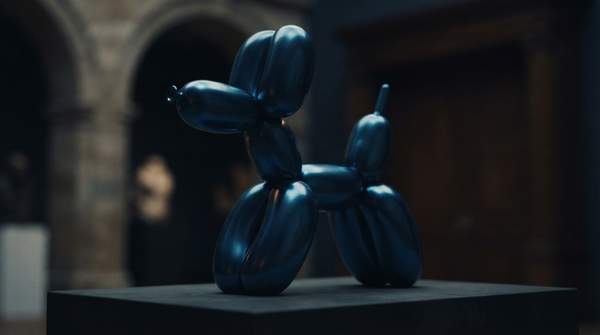
Jeff Koons works in the opposite direction, preserving an object's recognizable form while replacing its substance. His own studio biography describes him as "challenging the limitations of fabrication while transforming everyday images and objects into works of art that engage the viewer in a dialogue with the time in which we live and our historical past." His Balloon Dog sculptures (1994–2000), fabricated in high-chromium stainless steel with transparent color coating, turn a party favor into a monumental, mirror-like object. A scholarly overview by Bokumoni Akonga Jonas Theodore, published by Scientific Research Publishing in 2024, characterizes Koons's sculptures as grand and captivating works exploring themes of pop culture and mass consumption.
His Gazing Ball series pushes the strategy further, pairing white casts of Greco-Roman sculptures with utilitarian suburban objects such as mailboxes and birdbaths — the commentary lying in the collision of historical prestige and lawn-ornament Americana.
Josh Faught, by contrast, creates almost nothing. His strategy, as recounted in a SFMOMA feature on artists who find inspiration in everyday objects, is collection: "For me, the idea of collecting is like buying a prom dress when you don't have a prom to go to right away," Faught says. "I'm looking for objects that have a story that exists." Rather than fabricating new forms, he curates found materials that already carry human narratives. The social commentary in his practice resides in the objects' accumulated histories — the traces of use, ownership, and loss that ordinary things silently hold. SFMOMA situates him alongside Robert Rauschenberg, who famously incorporated found materials, what some might consider trash, into his work, placing Faught within a lineage of artists who treat discarded or humble items as vessels of lived experience.