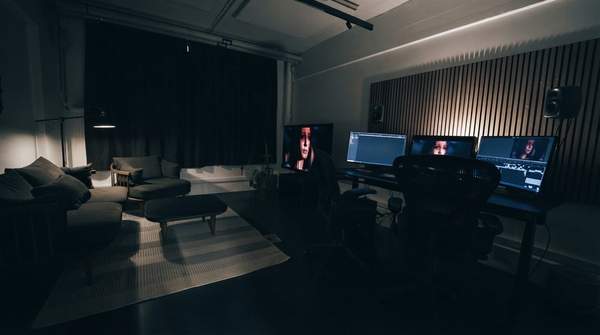
A "director's cut" is not one thing. Depending on who is speaking, it can mean a rough early edit that no director wants the public to see, a restored version of a film reclaimed from studio interference, or simply a longer re-release dressed up for home video shoppers. Understanding which meaning applies is the key to reading the label critically.
The Director's Cut: More Than Just a Longer Film
In public use, the term refers to the director's preferred version of a film, generally contrasted with a theatrical release the director did not control. But as the film-history writer Mikhail Skoptsov has observed, a director's cut more often constitutes a retroactive authorial revision made possible by an intersection between the creative interests of Hollywood filmmakers and the commercial interests of film distributors. The label carries a promise of authenticity that its history does not always support. The term's journey from an internal editing-room stage, to a contractual creative right, to a streaming-era marketing device is a story about power in the film industry as much as about art.
Origins: The Fight for Creative Control
Inside the industry, "the cut" has always meant the whole editing process and its product, and a director's cut was originally just the version the director assembled first — often including unsatisfactory takes, a preliminary soundtrack, and missing pick-up shots that the director would never want an audience to see. It was a working stage, not a product. What transformed it into a matter of principle was the Directors Guild of America's campaign in the 1960s, when a generation of directors pushed back against a studio system that routinely recut films without them.
The Guild's Creative Rights Committee made its first act the drafting of "A Bill of Creative Rights," released in April 1964. As the Guild's own historical account records, the manifesto defined the director as the person who "translates a motion picture script, story, or idea into visual and aural terms and arranges the images and sounds in a relationship he considers proper." The battles were granular as well as philosophical: committee member Hayden recalled that even securing directors an office with "three walls and a door" at the studios took a couple of years. By his account, the progress made by the Creative Rights Committee from the early 1960s through the 1970s was extraordinary. The director's cut thus entered the industry's vocabulary as a formal, hard-won right — the director's guaranteed opportunity to shape the film before others took over.
Timeline: The Evolution of the Director's Cut
Sequencing the legal, technological, and cinematic milestones reveals the causal chain: a union fight established the director's cut as a right, home video turned it into a product, and marketing diluted it into a label.
| Date/Era | Milestone | Significance |
|---|---|---|
| 1942 | Charlie Chaplin re-edited his 1925 silent film The Gold Rush for rerelease, with a new soundtrack, narration, different frame rate, and tightened editing. | Predates the formal director's cut concept, but is an early example of a director revisiting and revising his own finished work. |
| 1964 | The DGA's Creative Rights Committee releases "A Bill of Creative Rights." | Established the director's cut as a formal, hard-won right within the industry, defining the director's role across the whole motion picture process. |
| 1960s–1970s | The Committee wins concessions on key creative issues in labor negotiations. | Directors gain progressively more control over how their films are assembled and finished. |
| 1974 | The "director's cut" of Sam Peckinpah's The Wild Bunch is shown theatrically in Los Angeles to sold-out audiences. | A significant public instance of a film being restored closer to its director's intent, marking the trend of releasing alternate cuts for artistic reasons. |
| Early 1980s | The home video industry rises; Los Angeles cable station Z Channel popularizes alternate cuts. | Shifted the term's perception from an internal industry right to a public-facing marketing concept, serving a small but dedicated cult fan market. |
| Post-1980s | "Extended editions," "special editions," and "uncut" versions proliferate on home video. | Commercial dilution of the term: many versions so labeled are not the director's preferred vision at all. |
| 2021 | Zack Snyder's Justice League is released on a streaming service. | Streaming platforms provide new avenues for directors to release their preferred versions, sometimes years after theatrical release. |
The Home Video Revolution and Commercialization
As the home video industry rose in the early 1980s, video releases of director's cuts were sometimes created for a small but dedicated cult fan market, and the Los Angeles cable station Z Channel is also cited as significant in popularizing alternate cuts. The economics were straightforward: a second version of an existing film was cheap to produce and gave collectors a reason to buy again. What had begun as a claim of artistic authority became a retail category. The term's public meaning detached from its industrial one — no longer a stage in editing or a contractual entitlement, but a promise on a box that this version was somehow truer.
Understanding the Different Meanings of "Director's Cut"
Today the label covers at least three distinct things, and directors themselves have been blunt about the slippage. Ridley Scott, discussing the rerelease of Alien, rejected the traditional definition outright: "The traditional definition of the term 'Director's Cut' suggests the restoration of a director's original vision, free of any creative limitations... Such is not the case with Alien: The Director's Cut. It's a completely different beast." James Cameron has expressed similar sentiments about the special editions of his films: "What I put into theaters is the Director's Cut. Nothing was cut that I didn't want cut. All the extra scenes we've added back in are just a bonus for the fans."
The distinctions worth keeping in mind are these. First, the internal industry cut: the director's first assembly, still containing placeholder material the director would never show. Second, the restored vision: a version reinstated after studio cuts, as with The Wild Bunch in 1974. Third, the marketing version: an extended or special edition whose additions are commercial rather than authorial — a category that, as the film-craft resource StudioBinder notes, includes Cameron's and George Lucas's "special editions," where the theatrical release can be seen as the director's definitive vision and the extras are fan bonuses. The motivation behind any given release can vary significantly, from artistic restoration to commercial appeal, and the label alone does not tell you which.
The Modern Era: Streaming and Director's Cuts
The 2021 streaming release of Zack Snyder's Justice League showed how far the concept has traveled. The film critic outlet FACETS described it as a monumental streaming release — "an attack back at the big studios," with the artistic voice being heard over everything else — and noted that fan campaigning on social media made it feel like a cult classic before it was even released. The episode demonstrates both halves of the director's cut's modern identity: a genuine restoration of a director's vision after a studio-mandated replacement cut, achieved through an unprecedented public campaign.
It also shows how the term now functions as a cultural event, in which audience advocacy, platform strategy, and authorial intent are inseparable. Streaming has removed the shelf-space constraints of home video, making it easier than ever to release a second version — for any reason at all.
Navigating the Director's Cut: What to Look For
When encountering a "director's cut," critically assess its stated purpose and context rather than assuming it is always the definitive artistic version. The reliable indicator is language: the presence of marketing terms like "extended edition" or "uncut" on a film's packaging or streaming description, or explicit statements from the director regarding their involvement and intent. Scott and Cameron's own comments show that directors frequently regard the theatrical version as their true cut, and treat added material as a bonus rather than a correction. A release framed as a restoration after documented studio interference — the Wild Bunch or Justice League pattern — means something different from a disc labeled "extended" to move units. The label tells you a version exists; only the context tells you why.
Sources
- Director's cut - Wikipedia — EN
- The origin and evolution of the "Director's Cut" — Textualvariations
- Director's Cuts — Do They Actually Make the Movie Better? — StudioBinder
- Director’s Cut — DGA
- Exploring the Unreleased and the Remastered: A Look into Director’s Cuts — FACETS | Experience the edge of cinema.