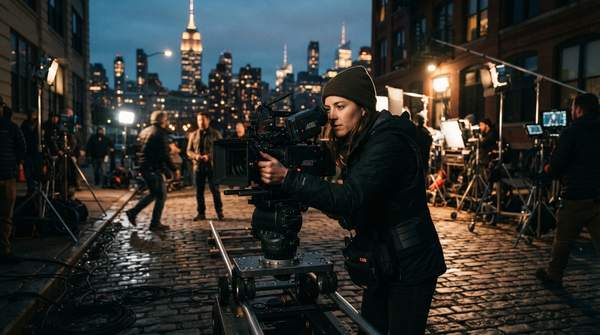
As of 2026, artificial intelligence (AI) tools are increasingly integrated into film and television production, offering specialized solutions across various stages, from initial script development to final post-production. These tools aim to streamline workflows and enhance creative output, but their adoption necessitates a clear understanding of their distinct applications and implications for creative control and intellectual property rights.
The most effective AI tools for film and TV production extend beyond merely generating content; they connect AI-assisted creativity with the practical planning documents essential for moving a production from script to shoot. This integration helps address production bottlenecks and exposes missing details without replacing human judgment or artistic taste, according to Studiovity, a platform that offers AI-assisted production planning.
The AI Revolution in Film & TV Production: An Overview for 2026
The landscape of film and TV production is undergoing a significant transformation with the advent of AI tools. These technologies are designed to assist filmmakers and producers in various capacities, from automating repetitive tasks to generating visual concepts. The goal is to enhance efficiency and creative possibilities throughout the production pipeline.
AI tools are categorized by their primary application, such as pre-production planning, generative content creation, and post-production editing. For instance, platforms like Studiovity focus on comprehensive script-to-shoot workflows, integrating AI for screenwriting, script analysis, storyboarding, scheduling, and budgeting. Other tools, like Runway, specialize in generating sequences or concept films, while Flawless offers assistive AI for post-production, emphasizing the protection of artistic rights and human authorship.
The strategic integration of these tools requires careful consideration of their specific benefits, limitations, and how they fit into existing workflows. The aim is to build a "stack" of AI tools that address particular production problems and create real value, rather than adopting them indiscriminately, as advised by Studiovity.
Assistive AI vs. Generative AI: Creative Control and Rights
A critical distinction in the current AI landscape for film and TV production lies between "Assistive AI" and "Generative AI," particularly concerning creative control and intellectual property. Flawless, a company pioneering assistive AI tools, highlights that not all AI is built with the same principles.
Assistive AI is designed to amplify human creativity, producing cinema-quality, copyrightable outputs. These tools are built for artists and are already utilized by major studios and streamers. Flawless's model, for example, focuses on protecting artistic rights, real performances, and human authorship. It operates with clear rights and provenance policies, ensuring that content created remains fully copyrightable and owned by the creator, with media ring-fenced for contracted projects and never used to train general models without explicit consent.
In contrast, Generative AI often operates by training on scraped studio and artist material without explicit permission. This approach can result in low-quality, synthetic, and uncopyrightable outputs, effectively replacing human creativity rather than enhancing it. Duncan Crabtree-Ireland, Executive Director of SAG-AFTRA, has encouraged the industry to pay attention to models like Flawless, which demonstrate a path toward an AI future that expands creative opportunity while respecting creators.