Film archivists do two jobs at once. They are technicians who stabilize decaying physical media, and they are curators who must decide, image by image, what a restored film is allowed to become. The International Federation of Film Archives (FIAF), the profession's international body, frames digital restoration not as a technical "cleaning up" of pictures but as a curatorial act governed by strict ethical limits: restorers must not rewrite history, conceal inconvenient truths, or "correct" a film's content. Understanding both halves of the role—chemical decay on one side, ethical judgment on the other—is what separates genuine preservation from well-intentioned revision.
Introduction: The Archivist's Dual Role
The scale of the task is enormous. As FIAF's training materials describe, globally, thousands of kilometers of shelving are dedicated to housing diverse audiovisual cultural assets, including magnetic tapes, film canisters, photographic collections, and various video and audio media. These materials require preservation, protection, and digital accessibility. Safeguarding this tangible and intangible cultural heritage requires comprehensive knowledge of recording methods, materials, and technologies, along with deep expertise in transferring material into future-proof formats.
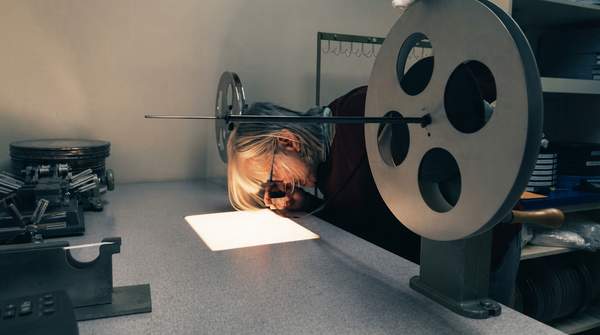
That expertise is deliberately broad. FIAF's descriptions of professional training programmes outline a curriculum spanning print inspection, identification, and mending; cataloguing; comparative copyright analysis; climate-controlled warehouse design and management; study of analogue, electronic, and digital supports; restoration budgeting and fundraising simulations; conservation structures for both photochemical and digital materials; projection on film and digital supports; and the creation of public exhibition programmes and internet access to collections. The training body's stated aim is to produce multi-skilled specialists who are up to date with the most current technical, methodological, and ethical issues in the field. The archivist's workflow therefore runs from the moment a canister is opened on an inspection bench to the moment a restored film reaches a public audience—and at every stage, technical and curatorial judgment are intertwined.