Found footage cinema is a storytelling mode in which a film pretends to be raw, unedited recordings recovered after the fact—diary tapes, surveillance files, a documentary crew’s abandoned reels. The conceit is that the camera exists inside the story world rather than floating invisibly around it, as in conventional narrative cinema. The genre’s power has always been twofold: it lends fictional events the texture of evidence, and it inherits a long literary tradition of the “found manuscript” that authenticated Gothic tales centuries before anyone picked up a camcorder. That dual inheritance—of authentication and of appropriation—is also where its ethical weight lies.
From Found Manuscripts to Early Cinematic Experiments
The genre begins, conceptually, on paper. As Tomasz Sawczuk of the University of Białystok has argued, the trope of the found manuscript has served as “an authenticator of the story and a well-tested enhancer of immersion” since the birth of Gothic fiction, with purported textual artifacts—diaries, letters, fragmentary confessions—aligned with the genre’s anxieties about veracity, authorial originality and agency. The film scholar’s framing matters here: this is a shared narrative strategy across media, not a direct causal chain. Still, Sawczuk identifies a revival of the convention precisely through film, when the principally literary trope was remediated by the found footage horror subgenre. An encyclopedia treatment of the form similarly notes precedents in the epistolary novel, built from correspondence or diary entries purportedly written by someone central to the events.
The leap to film required a distinctive formal decision: making the recording device part of the story world, whether a handheld camera, a fixed surveillance unit, or some other device. In horror, the 1980 Italian film Cannibal Holocaust is widely regarded as foundational. Its plot concerns an anthropologist and rescuers leading a jungle expedition to find a missing group of filmmakers—whose recovered reels become the film’s centerpiece. Yet even here classification is contested.
Horror writer Christina Escamilla acknowledges a genuine debate about whether the film counts as found footage or drifts toward mockumentary, and she notes it is very clearly discussed as a snuff film—one meant to depict actual murder—while personally judging that it fits the “rules” she outlines for the form. After Cannibal Holocaust, found footage films existed but remained mostly obscure, with scattered examples in the 1980s and 1990s refining the format before its breakthrough.
Evolution of Found Footage Cinema: A Timeline
The genre’s development is best read as a sequence: a literary authentication device becomes a cinematic convention, is consolidated in a notorious early horror work, erupts into the mainstream, and finally becomes an object of critical and institutional scrutiny. The table below traces that lineage.
| Era / Year | Development or Film | Contribution to the Genre | Ethical or Stylistic Implication |
|---|---|---|---|
| Pre-cinematic era | Literary found manuscripts and epistolary novels | Authenticated fictional narratives and deepened immersion; conceptual groundwork for found footage | A conceptual precedent rather than a direct cinematic influence; it established the power of “discovered” artifacts to blur truth and fiction |
| 1980 | Cannibal Holocaust | Widely regarded as a foundational found footage horror film; its expedition plot makes the recovered reels central to the story | Debated classification—found footage, mockumentary, or snuff film—foregrounding the genre’s capacity to be mistaken for real atrocity |
| 1980s–1990s | Manson Family Movies (1984), Les Documents Interdits (1989–1991), The Last Broadcast (1998), America’s Deadliest Home Video (1993) | Mostly obscure works kept the format alive and developed techniques later associated with the genre | The format matured outside the mainstream, refining its simulated-amateur aesthetic |
| 1999 | The Blair Witch Project | Brought found footage horror into the mainstream; a watershed that demonstrated the genre’s commercial viability and immersive potential | Its success triggered a boom in found footage horror and made authenticity-as-marketing a defining question |
| 2000s–2020s | Format diversification (Dashcam, 2021, among later examples) | Escamilla observes the genre adapting to new media—screencasting, screenlife films, drones, GoPros—and growing more immersive | Expands the “story-world camera” conceit while intensifying realism |
| Contemporary era | Archival appropriation as critical practice | Filmmakers increasingly reuse archival film to address or critique the production of historical knowledge, as scholar Finn D’Amico-Jubak documents | Raises questions of ownership, enclosure and extraction that extend well beyond copyright into institutional critique |
The Mainstream Breakthrough: The Blair Witch Project and Beyond
Whatever the earlier experiments achieved, it was The Blair Witch Project in 1999 that, in the standard account, brought found footage horror into the mainstream. The film’s significance was less its invention of the technique than its proof that audiences would accept the conceit at scale—and that the simulated amateurism of shaky handheld footage could be a feature rather than a defect. Its commercial success set off a boom in the genre, particularly within horror, where low production costs and the built-in plausibility of “recovered” recordings made the format unusually attractive to independent filmmakers.
The boom did not stay static. Escamilla, surveying the genre’s trajectory, argues that found footage “will continue to change with the times,” citing films built around screencasting and screenlife as well as those adopting drones, GoPros and other technologies, and predicting an increasingly immersive future for filmmakers “brave enough to continue pushing the envelope.” Her reading frames the genre as an adaptive form whose core convention—the camera inside the story—can migrate to whatever recording medium a given decade produces.
Ethical Considerations: Appropriation, Authenticity, and Reality
Found footage raises two distinct ethical questions, and conflating them obscures both. The first concerns the genre’s blurring of fiction and reality: a film that successfully simulates discovered evidence invites audiences to mistake invention for record, a capacity Cannibal Holocaust’s contested reputation as a snuff film already demonstrates. The second, more recent question concerns appropriation—the literal reuse of footage from archives and other works.
Film scholar Thomas Elsaesser, in a 2023 chapter titled “The Ethics of Appropriation: Found Footage between Archive and Internet,” argues that the creative use of archives brings in new ethical questions precisely because digital filmmaking changes the medium’s relationship to reality. Where analogue filmmaking sought to capture reality in order to harness it into a representation, he writes, digital filmmaking—conceived from post-production—proceeds by extracting reality in order to harvest it, a shift that changes “the cinema’s inner logic and ontology” and demands a different perspective on the ethics of appropriation. The moral issue is not merely who owns a clip but what it means to lift recorded reality from its context and reassemble it.
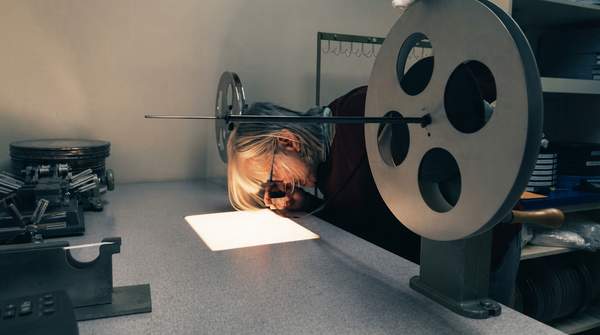
Contemporary practice makes this concrete. Finn D’Amico-Jubak, writing in NECSUS, notes that over the last ten years reuses of archival film have proliferated across geographies and styles, from experimental to mainstream, with American filmmakers using collage and found footage techniques to critique the production of historical knowledge. Such films, D’Amico-Jubak contends, foreground the material conditions of ownership and the histories of enclosure and extraction shaping the archival world—an institutional critique that encompasses the power relations among archives, filmmakers and community stakeholders. The practical pressures are visible in a filmmaker Pettengill’s observation, quoted in that same discussion: archival films are expensive to make because most archives are corporately owned, so some fair-use footage winds up being “really bad quality”—a limitation some filmmakers deliberately expose rather than disguise.
That degraded aesthetic carries its own theoretical weight. The low-resolution image circulating outside capitalist networks of monetization was memorably theorized by Hito Steyerl as the “poor image,” and filmmakers referencing her essay have leaned into poor quality as a visible marker of material conditions. In found footage, then, the scratchy, compressed, second-hand image is simultaneously a genre convention, a production constraint and an ethical statement about where images come from.
Navigating Authenticity: A Filmmaker's Ethical Compass
These threads converge on a practical decision for any filmmaker drawn to the form. Filmmakers considering found footage must critically evaluate their use of archival material and simulated reality to navigate ethical responsibilities regarding authenticity and potential misrepresentation. That evaluation runs on two tracks: the representational one, asking what harm or confusion a plausible simulation of real events may cause, and the appropriational one, asking how sourced footage is owned, extracted and reframed. Neither track reduces to copyright law alone; the critical literature treats ethics here as a question of ontology and institutional power, not merely legal compliance.
For the genre’s future, the measure of success is observable: audience and critical reception, particularly discussions around a film's perceived authenticity, its impact on real-world narratives, and engagement with fair use principles. A found footage film that provokes genuine debate about whether its images are real has succeeded aesthetically; one that clarifies rather than exploits the boundary between harvested reality and constructed fiction—and about where its archival material came from—has succeeded ethically. Watching which upcoming films make those material conditions visible, as the archival appropriationists already do, is the clearest way to track where this evolving form goes next.