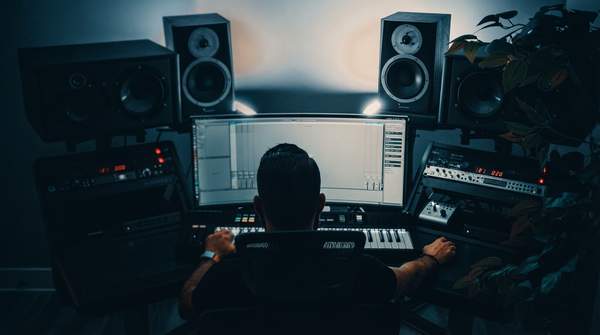
Contemporary film composers blend orchestral and electronic elements through three principal moves: layering acoustic and synthetic sounds within a single cue, processing orchestral recordings until they behave like electronic source material, and mix engineering that keeps every element audible beneath dialogue and effects. The practice is now standard rather than experimental, and it serves two masters at once — the emotional depth audiences associate with strings, and the energy they associate with synthesis. Oscar-winning work by Ludwig Göransson and the mixed score of Suicide Squad show the method at the highest level, and each stage of it is learnable.
The Art of Hybrid Film Scoring: Blending Worlds
The hybrid score did not appear overnight. The majority of film scores remain orchestral works rooted in Western classical music, but electronic elements have appeared in scores since the 1950s, and many scores written today feature a hybrid of orchestral and electronic instruments. When synthesizers became commercially available in the mid-1960s, they gave composers a sound-creation platform that did not require a symphony orchestra — yet, as Roland's listening guide on electronic film scores notes, electronic instruments can also work alongside traditional elements, enhancing them in a way that imprints a futuristic character.
That pairing is precisely what defines the hybrid approach: the orchestra is not replaced but extended. Composer Kaspar Noé, writing on his own journal about hybrid orchestral music, points to Ludwig Göransson's Oscar-winning scores for Black Panther and Oppenheimer as the model. Göransson recorded orchestras and then treated those recordings like electronic source material, "bending acoustic performances until they sound like nothing an orchestra could do alone, yet feel like everything an orchestra means." The lesson Noé draws is blunt: "The technology never replaced the orchestra. It extended it."