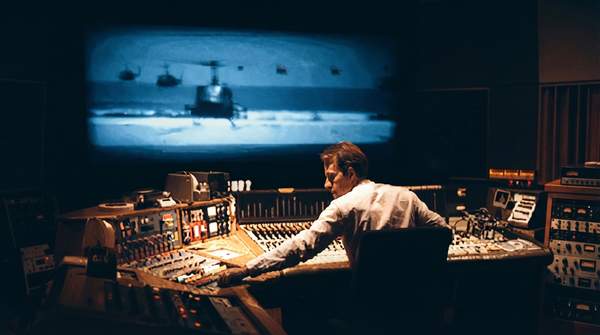
Immersion in film rarely comes from dialogue or the score alone. It comes from a deliberate, structured process: sound designers begin with foundational elements such as Foley, sound effects and recorded ambience, then manipulate those raw ingredients through techniques like ambient layering and spatial audio mixing until they form a cohesive sonic environment. Understanding that progression — from element, to technique, to perceptual effect — is what separates a casual listener from someone who can genuinely analyze how a film's soundscape produces tension, realism and emotional depth.
The Foundation of Film Sound: Beyond Dialogue and Music
At its core, sound design involves the meticulous creation, curation and manipulation of audio elements to complement and elevate what appears on screen, as Dave Hagen explains in his writing for the Dark Horse Institute, an audio engineering and music business school. The discipline encompasses dialogue, Foley effects, original synthesized sounds, ambient recordings and music; on large productions, entire departments exist to perfect each of these categories.
The individual elements are well defined. Writing on post-production, Gigantic Studios describes Foley as the reproduction of everyday sounds added to enhance audio quality, while sound effects are artificially created or enhanced sounds used to emphasize a visual element or establish a particular ambiance. Ambience — the persistent sound of a place itself — supplies the bed on which everything else sits. These are the raw materials, but they are not yet a world. What transforms them is the manipulation that follows.