
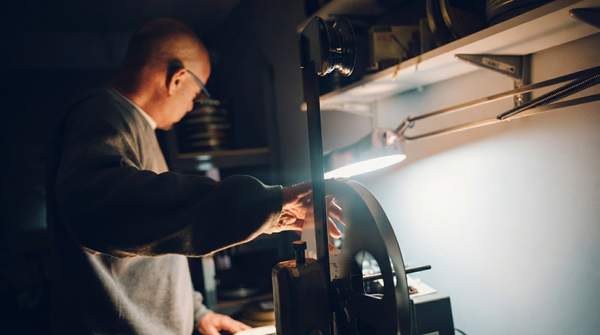
Digital restoration of a classic film is a hybrid craft: celluloid is physically repaired, scanned at high resolution, cleaned and color-corrected digitally, then output to a DCP or a new film print. The decisive question is not which technology is superior but where each method's capabilities end and where ethical judgment must begin. As the International Federation of Film Archives puts it, tools evolve while the foundational principles of ethical restoration should remain unchanged.
The Imperative of Film Preservation: Why Restoration Matters
Celluloid decays, and each act of copying compounds the loss. The Film Foundation's reporting on contemporary preservation quotes a stark warning: "Every generational reproduction represents a step away from the original. By the time you get to contemporary digital versions of an old movie, you risk creating a version that has little to no resemblance to the original." Restoration exists to interrupt that drift while keeping films watchable for scholars and new audiences alike.
Yet the field has moved past a false binary. Rajendra Roy of the Museum of Modern Art describes current practice plainly: "Current restorations generally are a combination of digital and analog processes: scanning film materials, digitally editing, integrating and cleaning the images, outputting to DCPs and in some cases 35mm prints." Even so, most archivists still treat film stock as the most stable medium for long-term preservation, as Jeff Lambert of the National Film Preservation Association has argued — digital tools serve access and repair, while celluloid remains the archival anchor.


